An emergency fund absorbs financial shocks without forcing an unexpected bill onto a credit card or loan. It can cover urgent repairs, medical costs, or lost income while you make decisions calmly. The goal is not to predict every crisis, but to create dependable breathing room when plans suddenly change.
Your useful target depends on essential costs, income stability, household responsibilities, insurance, and access to other resources. A renter with steady pay may need a different reserve from a contractor supporting children. This guide uses staged milestones, helping you balance cash savings with debt repayment and gradually rebuild after a withdrawal.
Define What an Emergency Fund Covers
Start by writing a plain definition of an emergency for your household. Job disruption, urgent plumbing, essential car repairs, and necessary medical treatment usually qualify. A planned holiday, annual insurance bill, or optional purchase belongs elsewhere. Clear categories prevent guilt during genuine hardship and stop expenses from draining the reserve needlessly.
Separate known future bills from true surprises by creating dedicated buckets for annual costs. Property taxes, school fees, maintenance, and insurance renewals are predictable even when they feel large. Funding them separately protects the emergency reserve. Keep the definition practical, though, because household needs and acceptable support arrangements differ quite widely.
Estimate Essential Monthly Costs
Review the last two or three months of spending before choosing a useful number. List housing, utilities, basic food, transportation, insurance, medication, and required debt payments. Include expenses that keep work and shelter secure. Using real transactions reveals a more credible monthly baseline than relying on memory or rounded guesses alone.
Mark each cost as essential, adjustable, or optional during a disruption. Essential costs keep people housed, fed, healthy, and able to reach work or school. Adjustable costs can shrink temporarily, while optional spending can pause. This exercise shows which obligations the reserve must cover and where flexibility often already exists today.
Adjust for Variable Income
If your pay changes, calculate essential costs across low income months rather than relying on a strong month. Review seasonal slowdowns, contract gaps, commissions, and irregular bonuses. A wider target may reduce the risk of repeated shortfalls. Keep contributions flexible, but base the plan on income you can reasonably expect.
Consider Insurance and Other Support
Insurance lowers some risks but rarely removes every cash need. Check deductibles, exclusions, claim delays, and coverage limits before counting a policy as support. Also examine paid leave, severance, family help, or public benefits, but treat uncertain assistance cautiously. Documented resources can shape your target; help should not replace savings.
Choose a Staged Savings Target
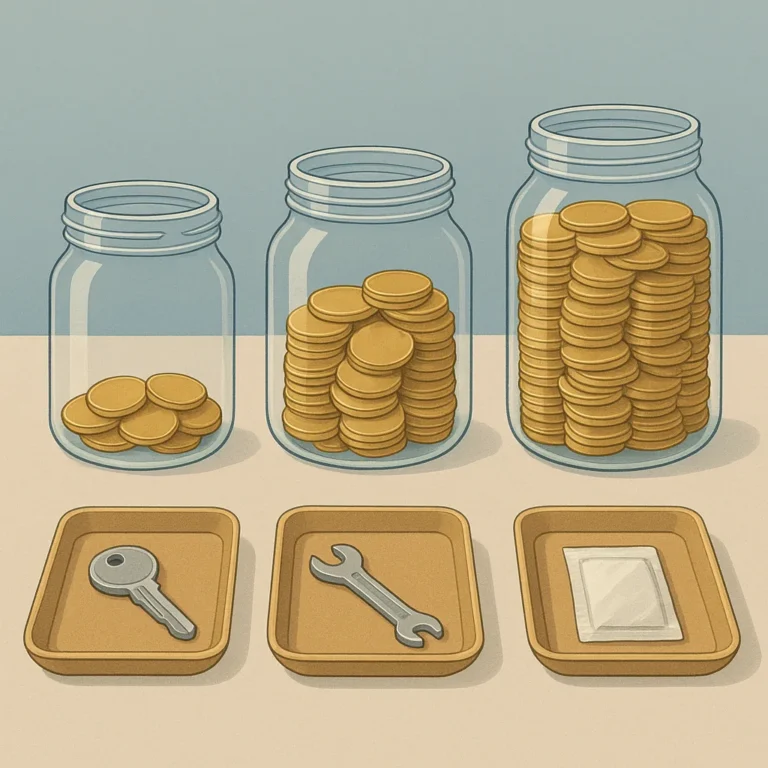
Choose a first milestone that feels reachable within your current budget. It might cover one urgent repair, a deductible, or several weeks of basic costs. The first win matters because visible progress builds trust in the system. After reaching it, set an intermediate target that matches your household obligations now.
A fuller reserve can eventually support several months of essential spending, but it is not a universal requirement. Compare the value of extra cash with high interest debt, overdue priorities, and available workplace protection. Increase the target as income becomes less predictable, dependents arrive, or fixed obligations grow over time.
Make Contributions Automatic
Schedule a transfer soon after each paycheck or income deposit, when the money is available and the decision is fresh. A separate savings account reduces accidental spending and makes progress visible. Choose an amount that leaves room for necessities. Consistency usually beats an ambitious transfer that repeatedly causes reversals later.
Use a separate, accessible account with clear transfer rules and appropriate protection. Keep enough distance from everyday spending to reduce temptation, but avoid making withdrawals so difficult that a real emergency becomes more expensive. Review fees, transfer timing, and balance alerts. The best account supports access, safety, and steady visibility.
Use the Reserve Without Losing Perspective
When you withdraw money, record the date, reason, and amount without judging yourself. Confirm that the expense meets your definition of urgent need, then pause lower priority goals if cash flow is tight. A written record shows how the reserve helps and highlights risks worth addressing later with a plan.
Rebuilding does not require abandoning every other financial goal forever. Redirect part of new contributions toward the reserve, reduce optional spending for a defined period, and protect essential debt payments. If the withdrawal exposed a recurring problem, adjust insurance, maintenance, or income planning rather than simply chasing the old balance.
Review the Target Periodically
Review the target after a move, job change, new dependent, major purchase, or change in health coverage. Recalculate essential monthly costs and compare them with the account balance. Inflation can raise ordinary bills, while improved benefits may reduce some exposure. Update the plan whenever household reality changes meaningfully over time.
Finish each review by checking accessibility, transfer limits, account protection, and progress toward the next milestone. Do not turn the target into a test of personal discipline. A reserve is a working tool, not a trophy. Choose the next sensible step, automate it, and let steady decisions create breathing room.