
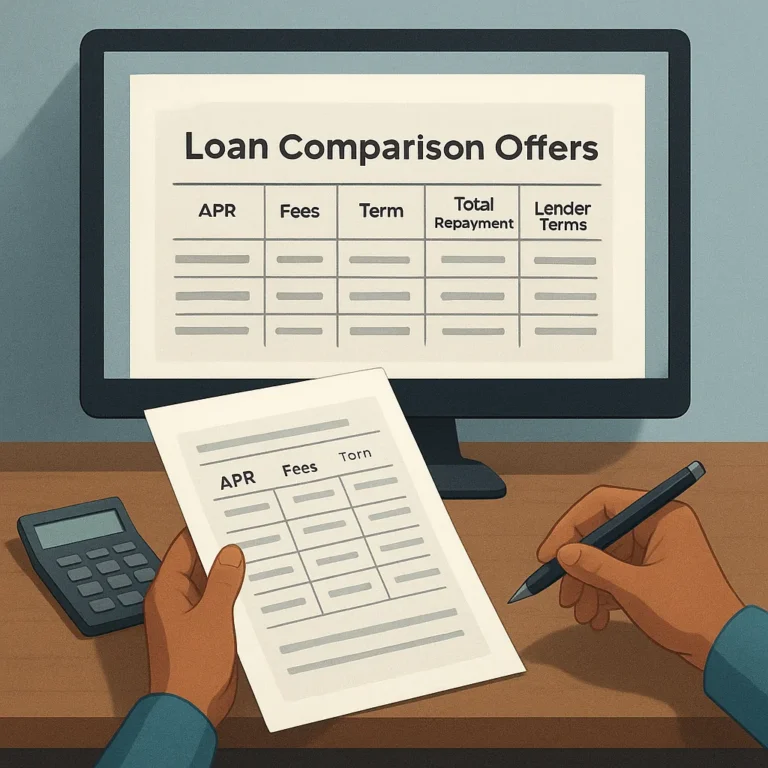
Comparing a personal loan is not a contest to find the smallest advertised payment. A low payment can hide a longer term, a higher total cost, or fees that change the deal after approval. Before choosing an offer, translate every proposal into the same set of numbers: amount received, annual percentage rate, finance charges, payment schedule, total repayment, and consequences of missed payments. Your borrowing purpose and budget matter just as much as the lender’s headline rate. This guide shows how to compare offers fairly, identify terms that deserve questions, and test whether the payment remains manageable if life becomes less predictable. A clear comparison can prevent urgency from turning into an expensive long-term commitment.
Start With the Total Borrowing Need
Write down the exact amount the project requires and separate it from any optional amount a lender says you qualify for. Include taxes, delivery, closing charges, or other costs that will not appear in the item’s sticker price. Then subtract cash you can safely contribute without draining your emergency reserve. Borrowing more than necessary increases interest and may encourage spending simply because funds are available. If the purpose is debt consolidation, list each balance, its current rate, and any payoff fee before applying. This creates a target loan amount and makes comparison less vulnerable to sales pressure.
Compare APR and Finance Charges
Use APR as a starting point, not the only figure you read. The annual percentage rate generally reflects interest plus certain required costs, making it more useful than a promotional interest rate for comparing similar offers. Still, ask what fees are included, when interest begins, and whether the quoted APR depends on autopay or another condition. Check the finance charge and total of payments in the disclosure documents. Two loans with the same APR can produce different dollar costs when their amounts or terms differ. Compare identical loan amounts and repayment periods whenever possible.
Read the Term, Payment, and Payoff Rules
Examine the term and payment together. Extending repayment can lower each monthly bill, but it usually gives interest more time to accumulate and may keep the debt in your budget for years. Calculate the total amount paid, not just whether the payment fits today. Ask whether the loan allows extra payments without a prepayment penalty and whether additional payments reduce principal immediately. Review the due date, grace period, late fee, and reporting practices as well. A payment that barely fits is a warning sign; leave room for rent, essentials, savings, and routine surprises before accepting the offer.
Check Lender Terms and Warning Signs
Look beyond the rate to the lender’s operating terms and credibility. Verify the company’s identity, contact information, licensing requirements in your state, and privacy practices before sharing sensitive details. Be cautious if approval is guaranteed regardless of credit, if a lender demands payment before disbursing funds, or if the offer creates pressure to act immediately. Read the agreement instead of relying on a salesperson’s summary, especially sections about variable rates, optional products, collateral, and default. A trustworthy lender should provide clear disclosures and enough time for you to understand the obligation.
Make a Side-by-Side Decision
Build a simple comparison table before making a decision. Put each lender in a column and record the amount deposited, APR, upfront fees, monthly payment, term, total repayment, late charges, and flexibility for early payoff. Add a personal stress test: could you still make the payment after a modest income reduction or an unavoidable repair? If one offer wins only because it assumes perfect conditions, it may not be the safest choice. Choose the proposal whose full cost and payment schedule you understand and can carry without sacrificing essential priorities.
Where to continue your research safely
To keep researching, review Consumer Financial Protection Bureau: Personal Loans and compare which option makes the most sense for your situation.
Key criteria to compare before you decide
A good decision depends on more than a first impression. Compare total cost, timing, reputation, effort required, and the clarity of the offer conditions. When those criteria are visible together, it becomes easier to tell whether an option solves the problem or only looks attractive at first.
How to use this guide for your next step
Review the criteria before moving forward
How should I compare personal loan offers before I borrow calls for context, comparison, and patience. Use the points above as a practical checklist: revisit your goal, look for concrete signals, and move forward only when the choice fits your current needs.